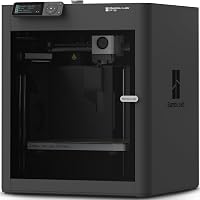
Elegoo Saturn 4 Ultra vs Mars 5 Ultra: Which to Buy? (November 2026)
Buy the Mars 5 Ultra for detail work on a desk, and pick the Saturn 4 Ultra 16K when you need large prints and a heated tank. The Elegoo Saturn 4 Ultra vs Mars 5 Ultra choice comes down to build volume first, resolution second.
On this page (8 sections)
- Quick verdict: which resin printer wins for most readers?
- Elegoo Saturn 4 Ultra vs Mars 5 Ultra side by side
- Build volume decides most buyers
- Resolution and detail: 16K vs 9K in practice
- Speed, cameras and smart features compared
- Build quality, weight and where the printer lives
- Heated tank and cold rooms
- Which should you buy?
Buy the Mars 5 Ultra for detail work on a desk, and pick the Saturn 4 Ultra 16K when you need large prints and a heated tank. That is the short answer to the Elegoo Saturn 4 Ultra vs Mars 5 Ultra question.
Build volume decides most of it, then resolution and room temperature tip the rest.
These are two different sizes of resin printer from the same maker. The Mars 5 Ultra has a 7-inch 9K screen and 18 μm XY resolution.
The Saturn 4 Ultra 16K steps up to a 16K panel, a bigger plate and a resin tank that heats itself.
Our score weighs specs, features and buyer feedback against what you're shopping for. The Mars 5 Ultra scores 8.7 and the Saturn 4 Ultra 16K scores 8.5, so the smaller machine edges the overall win.
Read on for the cases where the Saturn is the smarter buy.
Quick verdict: which resin printer wins for most readers?
The Mars 5 Ultra is the better buy for most people getting into resin printing. It gives you 9K detail on a 7-inch screen, a 150 mm/h tilt-release speed and an AI camera in a smaller footprint that asks less of your desk and your resin budget.
The win comes from fit rather than raw specs. Miniatures, keycaps, small props and detail parts all land inside the Mars 5 Ultra's plate.
A 7-inch 9K screen puts 18 μm pixels on that area, which is fine enough for the textures and edges those prints live on.
The Saturn 4 Ultra 16K answers a different need. Its 16K LCD resolves 15120 x 6230 px at 14 x 19 μm across an 8.33 x 4.66 x 8.66 inch build volume.
That combination is for people who print large busts, terrain or multi-part kits and still want sharp detail.
If your printing corner gets cold, the Saturn also has an argument the Mars cannot match. Its resin tank heats itself when the temperature drops below 25°C.
The Mars 5 Ultra has no heated tank. That single feature can decide the buy for anyone whose printer lives outside a heated room.
Elegoo Saturn 4 Ultra vs Mars 5 Ultra side by side
The table shows the split clearly: the Saturn wins on volume and the Mars wins on desk fit. Both share the same 150 mm/h tilt-release speed and AI camera monitoring, so most rows below are about size and screen.


| Feature | Elegoo Mars 5 Ultra | Elegoo Saturn 4 Ultra 16K |
|---|---|---|
| Screen | 7-inch 9K mono LCD | 16K LCD, 15120 x 6230 px |
| XY resolution | 18 μm | 14 x 19 μm |
| Build volume | Smaller plate | 8.33 x 4.66 x 8.66 in |
| Print speed | Up to 150 mm/h | Up to 150 mm/h |
| Heated tank | No | Yes, activates below 25°C |
| AI camera | Yes | Yes, with time-lapse and light |
| Leveling | Automatic | Automatic |
| Wi-Fi | Cluster printing | Transfer and cluster printing |
| Weight | 19.36 lb | 35.4 lb |
The weight row matters more than it looks. At 19.36 pounds, the Mars 5 Ultra is easy to lift onto a shelf or move to a window for ventilation.
The Saturn 4 Ultra 16K weighs 35.4 pounds and measures 12.8 x 12.9 x 21.5 inches, so it wants a dedicated bench.
Both machines use tilt release to peel each layer off the release film. The Mars 5 Ultra and the Saturn 4 Ultra 16K both list up to 150 mm/h.
The Saturn adds a 25% increase in light energy intensity to shorten curing time without needing ACF release films.
| Product | Best for | Build volume | Screen resolution | XY resolution | Our score |
|---|---|---|---|---|---|
| Elegoo Mars 5 Ultra | detailed small prints | Mars 5 Ultra size | 9K | 18 μm | 8.7 |
| Elegoo Saturn 4 Ultra 16K | large detailed models | 8.33 x 4.66 x 8.66 in | 16K | 14 x 19 μm | 8.5 |
Build volume decides most buyers
Build volume is the first question to answer, because a print that doesn't fit never starts. The Saturn 4 Ultra 16K gives you 8.33 x 4.66 x 8.66 inches of plate.
The Mars 5 Ultra's smaller plate suits single miniatures and small parts.
Picture your typical print before you picture the printer. A 28 mm miniature, a set of bases or a keychain fits the Mars 5 Ultra with room to spare.
A bust at display scale, a large terrain tile or a multi-part vehicle kit often needs the Saturn's plate.
Large plates have a cost beyond the printer. A bigger vat needs more resin to reach a working level, and a failed large print wastes more of it.
Small plates keep each mistake cheap.
When the Mars plate is enough
Choose the Mars 5 Ultra if your queue is mostly miniatures, small props and detail parts. Those models fill a 7-inch plate quickly and keep resin use low.
The smaller machine also fits small rooms. At 15.75 x 18.5 x 9.06 inches and 19.36 pounds, it can share a desk with your computer and still leave space to work.
When you need the Saturn plate
Go for the Saturn 4 Ultra 16K when your projects regularly exceed a small plate. Its 8.33 x 4.66 x 8.66 inch volume takes larger single prints and lets you batch small parts in one run.
The extra size also helps when you print hollow or multi-part models that must fit together. Fewer separate runs means fewer seams to sand and fewer chances for fit errors.
If you mostly print figures and small accessories, the Mars is the cleaner match. Our guide on the best resin 3D printer for beginners covers the beginner end of the market in more depth.
Resolution and detail: 16K vs 9K in practice
The Saturn's 16K screen has more pixels, but the Mars's 9K panel still resolves 18 μm detail on a smaller area. Pixel count alone doesn't decide which print looks sharper.
Resolution on a resin printer is measured in XY, the size of one pixel on the build plate. The Mars 5 Ultra lists 18 μm.
The Saturn 4 Ultra 16K lists 14 x 19 μm across its 16K screen. A smaller pixel can hold a finer edge, so the Mars's figure is respectable for its plate size.
The bigger factor is what you print. At miniature scale, both machines put plenty of pixels on the model.
At large scale, the Saturn's 16K panel keeps detail across a bigger area than a 9K panel would.
Buyers who print display pieces and terrain often notice surface detail first. Buyers who print gaming figures often notice fit and layer lines first.
Match the screen to the kind of print you sell or show.
Both panels sit behind 9H tempered glass for scratch protection. Both use a COB light source rated at 92% uniformity, so light spread across the plate stays even.
That even light is why both machines can hold detail from the center of the plate out to the corners, and why neither one is the weak link on brightness. The real gap stays in pixel size and plate area, not in how the light behaves.
Speed, cameras and smart features compared
Both printers top out at 150 mm/h and both watch the print with an AI camera. The differences sit in the extra monitoring features and the tank heating.
The Mars 5 Ultra runs fast and slow modes, so you can trade speed for detail when a model needs it. Its AI camera detects empty build plates and model warps and alerts you.
Elegoo notes that detection results vary with the environment, model and resin.
The Saturn 4 Ultra 16K also has an AI camera, plus time-lapse recording and an integrated light for clear monitoring day or night. Its mechanical sensor checks resin level, foreign objects, plate leveling and light board temperature.
Wi-Fi works on both. The Mars 5 Ultra supports 2.4G and 5G networks at 6–10 Mbps and can run cluster prints across several printers on one LAN.
The Saturn adds power-on resume and an automatic self-check at startup.
What the smart sensors actually watch
The mechanical sensor on each machine is the layer most buyers underrate. On the Mars 5 Ultra it supports residue detection to protect the LCD screen, and it raises timely alarms for resin shortages and leveling failures.
That means a print that runs low on resin or starts with a badly seated plate stops early instead of pressing cured material into the screen.
The Saturn 4 Ultra 16K adds high lamp temperature to that watch list and pairs the sensor with a spring for one-click calibration. It also resumes a print after a power loss.
In a shop where the power flickers, that resume feature can save an overnight run that would otherwise be lost.
Build quality, weight and where the printer lives
The Saturn is the heavier, larger machine and needs a permanent bench; the Mars is light enough to move. Plan the space before either one arrives.
The Mars 5 Ultra weighs 19.36 pounds and measures 15.75 x 18.5 x 9.06 inches. That makes it practical on a sturdy desk, with room to set down tools and a wash station.
The Saturn 4 Ultra 16K weighs 35.4 pounds at 12.8 x 12.9 x 21.5 inches. Its taller body and bigger vat suit a dedicated table where it can stay level and ventilated.
Resin printing needs airflow and a stable surface. A lighter printer is easier to reposition near a window, but neither machine should be carried while a print or a full vat is on board.
Set up a permanent spot with room for gloves, paper towels and a cure station.
If you are still choosing between resin and filament printing, our guide on which 3D printer should I buy walks through the decision. For filament machines in the same price conversation, the Elegoo Centauri Carbon vs Bambu P1S comparison is a useful next read.
Heated tank and cold rooms
The Saturn 4 Ultra 16K is the better choice for a cold room, because its tank heats resin automatically below 25°C. Cold resin changes how it flows and cures, and a heated vat keeps conditions steadier.
The heating system maintains a constant 25°C and supports 24-hour preheating. If your printer lives in a garage or a cool basement, that feature removes a seasonal problem the Mars 5 Ultra leaves to you.
The Mars 5 Ultra has no heated tank. In a warm room that costs you nothing.
In a cold one, you would need to warm the room or the resin before printing.
Living with a cold workshop
Think about the months when your garage or basement drops below 25°C. A heated tank keeps the resin at a working temperature before the first layer, so you are not waiting on a space heater to do the job.
The 24-hour preheat support means you can have the vat warm and ready for a morning run without standing over it.
The Mars 5 Ultra asks more of you in that setting. You would warm the resin yourself and keep the room from swinging in temperature during a long print.
In a warm house, that effort disappears and the smaller printer's advantages return. This is why the same pair of machines lands in different homes: the room often decides before the specs do.
Which should you buy?
Buy the Mars 5 Ultra if you print miniatures and small parts in a warm room, and buy the Saturn 4 Ultra 16K if you print large models or work in the cold. The final call in this elegoo saturn 4 ultra vs mars 5 ultra matchup is yours, but it follows your print queue and your room.
Pick the Mars 5 Ultra when your models fit a small plate and your desk space is limited. Its 9K screen at 18 μm, 150 mm/h speed and AI camera cover detail work well, and the lighter body is easier to move.
Pick the Saturn 4 Ultra 16K when your projects need the 8.33 x 4.66 x 8.66 inch volume. The 16K screen, heated tank and time-lapse camera make it the stronger machine for large display pieces and cold workshops.
For more on the smaller machine's detail work, see our roundup of the best resin 3D printer for miniatures. Either way, buy for the prints you actually make, not the biggest plate you can afford.
Frequently asked questions
Which printer has the sharper screen, the Saturn 4 Ultra or the Mars 5 Ultra?
The Saturn 4 Ultra 16K has the higher pixel count at 16K, while the Mars 5 Ultra runs a 9K panel. Resolution only matters when the pixels land on your model, so the Mars's smaller 7-inch screen still packs fine detail into miniature-sized prints.
Do I need a heated resin tank?
You need one when your printing room sits below 25°C for much of the year. The Saturn 4 Ultra 16K heats its resin automatically below that mark, while the Mars 5 Ultra has no heated tank.
Can the Mars 5 Ultra print large models?
The Mars 5 Ultra prints smaller models than the Saturn 4 Ultra 16K, whose build volume is 8.33 x 4.66 x 8.66 inches. Large busts, terrain tiles and multi-part kits usually need the Saturn's bigger plate.
Which one is easier for a first resin printer?
Both have automatic leveling, power-on self-checks and Wi-Fi transfer. The Mars 5 Ultra takes less bench space and uses less resin per mistake, which makes it the friendlier first machine of the two.